Leadership
Cultivating Space
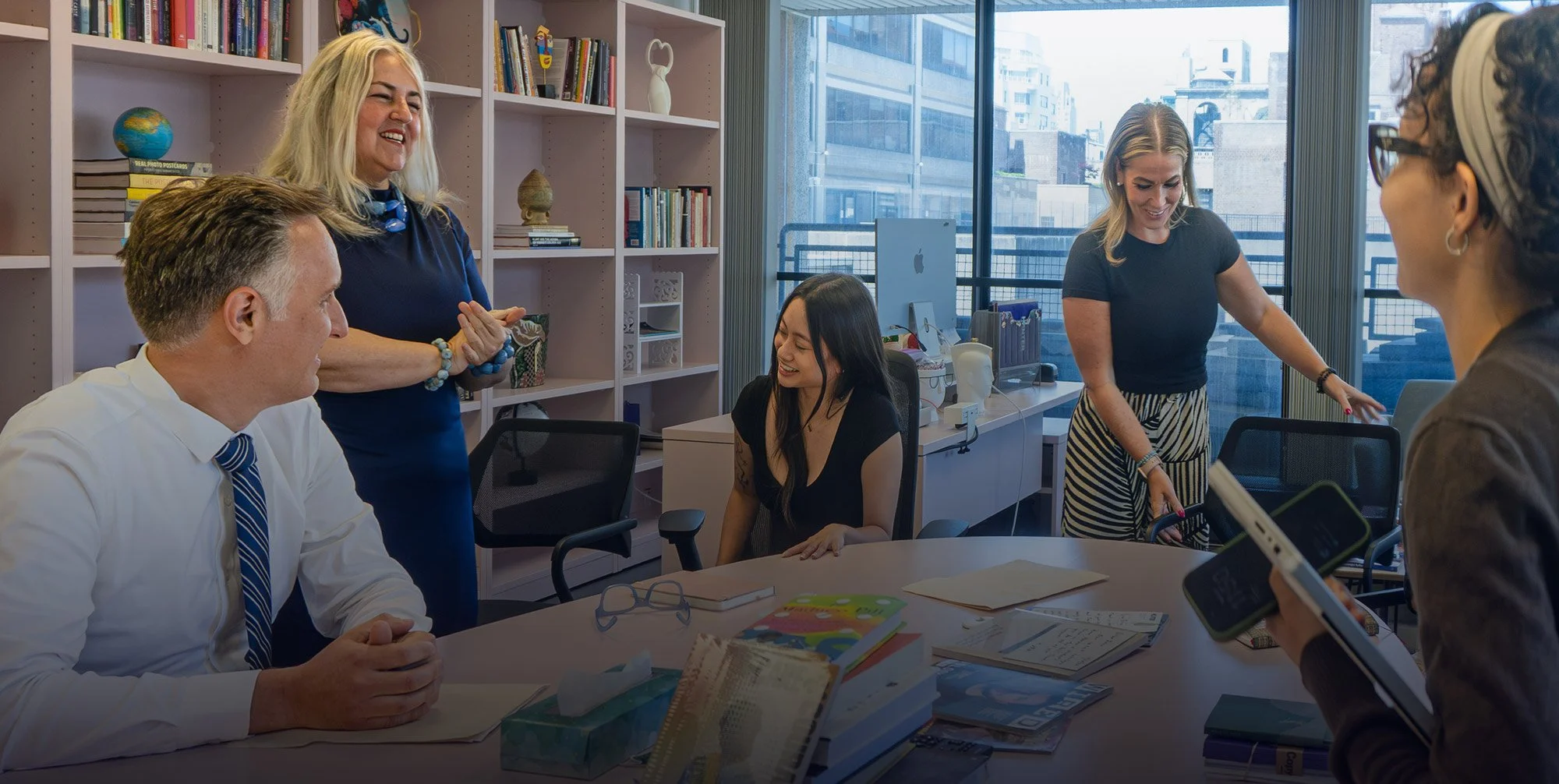
My office, with its pink desk, bookshelves lined with globes and Klimt paintings, and books about families living across boundaries and borders, offers a comfortable place to sit and linger with a wide view of Lexington Avenue stretching north to south. The space is a deliberate expression of what I believe a dean's office should feel like: a place where anyone who walks in knows immediately that curiosity is welcome, their story matters, and the conversation can go anywhere. That is the environment I try to build, in my office and across campus.
I will be honest about something that does not get said enough: I am not sure the people who want leadership the most are always the ones who should have it. The pursuit of a title can crowd out the pursuit of change. I came to the dean's role because I saw what it could make possible, all the things I had wanted done as a faculty member, as a student, as someone who had spent a career watching institutions fall short of the people they were supposed to serve. That is still why I am here.
My philosophy is simple, even when the work is not. My power as Dean comes from listening, really listening, and then finding ways to help the people around me achieve that for which they are already reaching.
![Two people holding signs at an event for Hunter College, with a blue backdrop displaying the school's name. The woman on the left is holding a sign that says "I [heart] Hunter" with the full name of the university below. The man on the right is holding a sign that says "Bridge the Future" for Hunter College Giving Day. Both are smiling.](https://images.squarespace-cdn.com/content/v1/69d2a17b44c655373605973b/2f0f084b-57f1-4d48-9b0b-0e248e8b1e88/Hunter-Giving-Day-opt.jpg)
When a department comes to me asking for a new faculty line in an area where enrollment is still growing, I sit with them and ask: what would it take to make this visible? We organize a "What Can You Do With This Major?" event on campus. We design a HUMANities x Tech program that shows students how this field speaks to the questions that actually matter to them. We build the case together. That is what shared equity leadership looks like in practice, a community figuring out what it needs and building toward it together.
And underneath all of it is a conviction I have carried since long before I became a dean: that the stories we tell about who belongs in higher education, what knowledge is worth pursuing, and which disciplines matter are never neutral. They shape what becomes possible. Changing those stories is part of the work.
-
The School of Arts and Sciences is one of the largest and most intellectually expansive academic divisions in the country, home to departments spanning the full range of human inquiry across the arts, humanities, social sciences, and STEM.
Nearly 17,000 undergraduate students and thousands more at the graduate level call the School of Arts and Sciences their home. Our educators are world-class researchers, inspired teachers, and innovative artists whose work is changing how we see, understand, and experience the world. Our students are diversifying fields that have long needed them, carrying their own stories into disciplines that are richer for their presence, and going on to do extraordinary things.
I am amazed every day that this is what I get to do, and I try to be worthy of this position in every interaction and decision I make.
-
Hunter College, which began as a college for women of all races and religions in the 1870s, has always understood that public higher education is itself a story worth telling and worth fighting for.
Our students carry the weight and the hope of their families and communities. They arrive as the children and grandchildren of immigrants, as first generation college students, as people for whom Hunter is one of life's genuine turning points, and they bring with them lives that this institution has a responsibility to honor, challenge, and amplify.
-
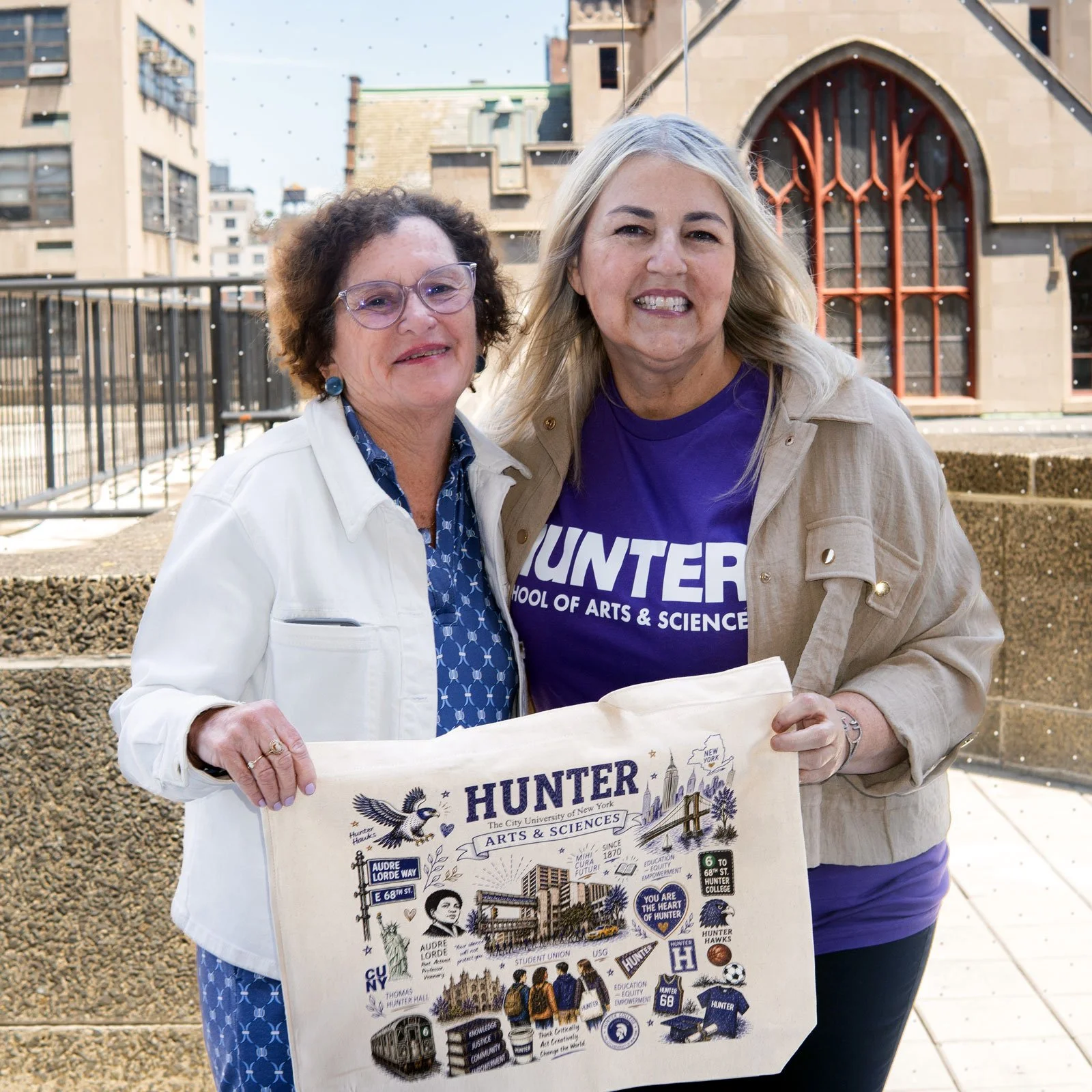
Our Heart of Hunter staff appreciation events exist because the people who keep this institution running deserve to be known. Our community thrives due to the work of many individuals including adjunct professors, student teachers, custodial teams, cafeteria staff, security personnel, among many others less visible.
In 2026, we invested more energy into these special days. We also collaborated on a new Hunter design that embodies the rich history and diversity of the School of Arts and Sciences. We gifted our staff with a new tote of the collage, comprised of playful illustrations of everything that makes this place what it is, conveying our belief that joy is part of the work, woven into it rather than separate from it.
-
We take seriously our role as an anchor institution, rooted in the communities our students come from and always striving to be a force for the public good. In a moment when public higher education is under attack, when the value of the humanities and arts is being actively contested, and when the communities our students come from are being targeted, the question is whether universities have the vision and the courage to tell a different story and to lead.
That is the question that drives my work every day, in the curriculum we build, the faculty we hire, the partnerships we forge, and the culture we create. How do we shape this moment rather than simply survive it? What stories do we want to tell about what a university is for, who it serves, and what becomes possible when it truly lives up to its promise? And what kind of institution do we want to be when we come through it?