HUMANities x Tech
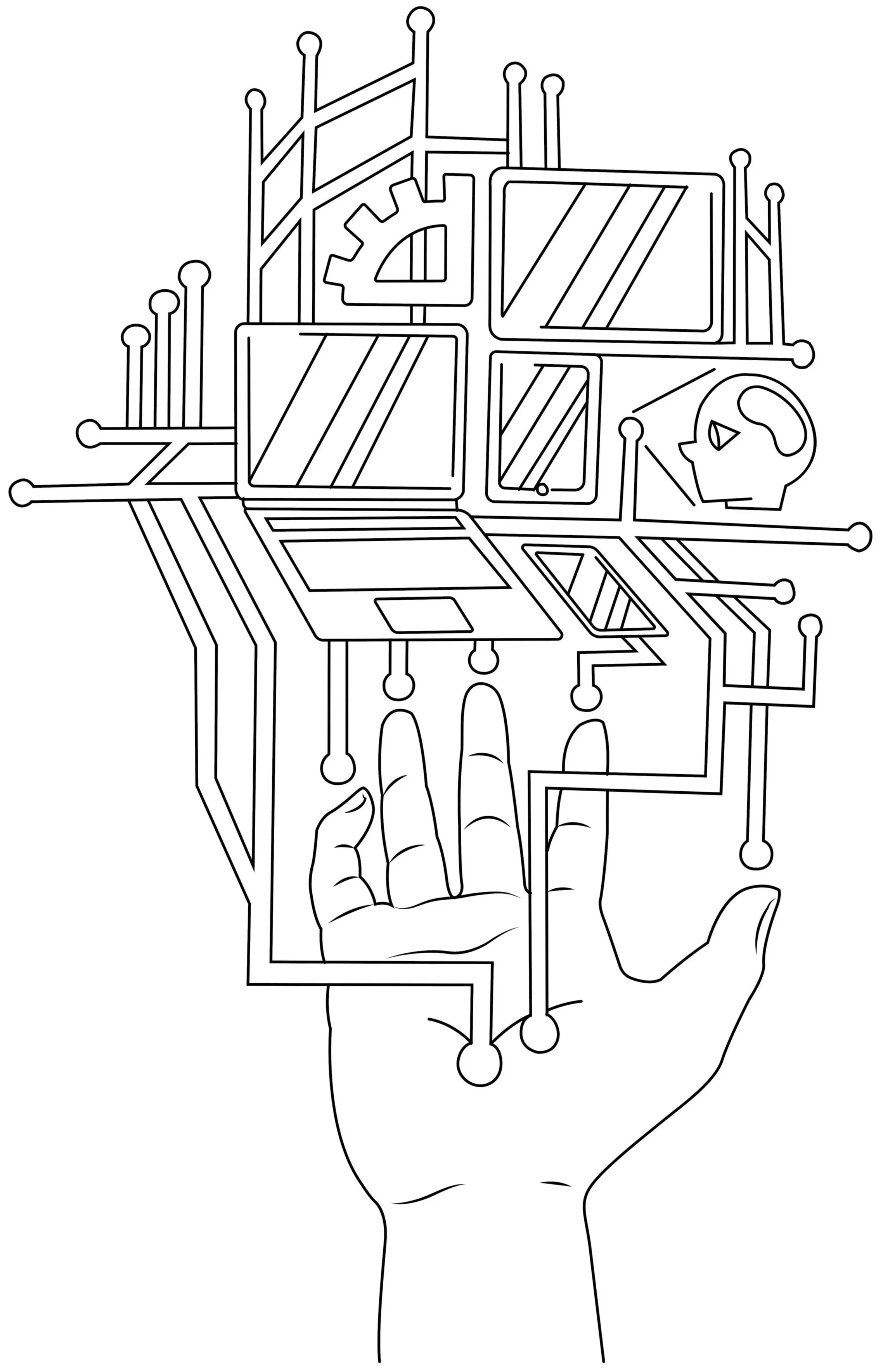
The question is not what do we do about AI. The question is who gets to shape it.
Every institution is asking the same question right now: how do we respond to artificial intelligence? At Hunter College’s School of Arts and Sciences, we decided that was the wrong question. The more urgent question is who gets to decide what AI becomes? Whose values will get built into its systems? Will universities prepare students to be its architects or simply its subjects?
Our answer is HUMANities x Tech.
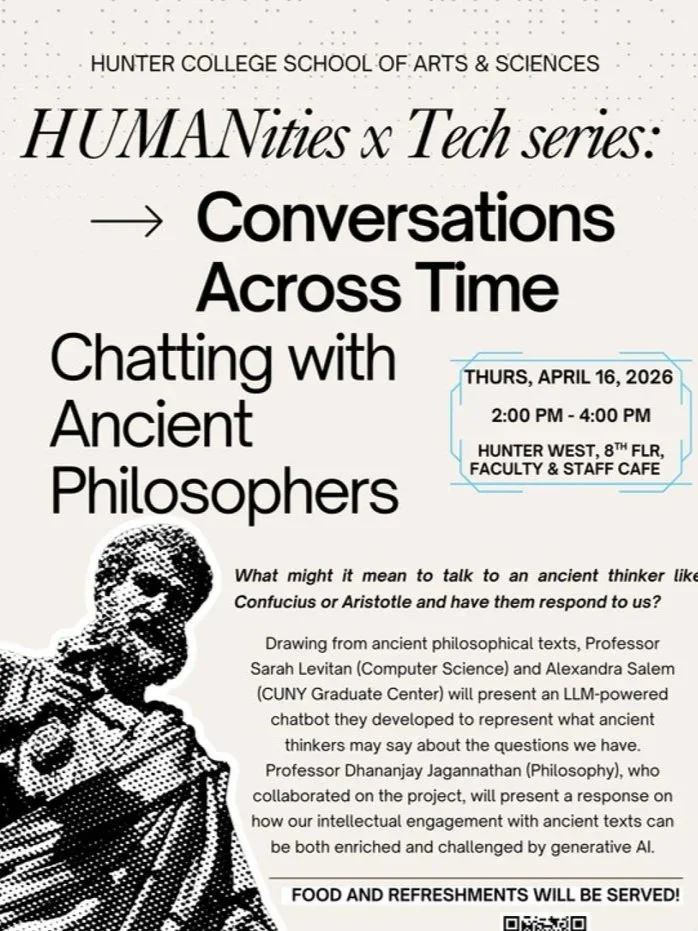
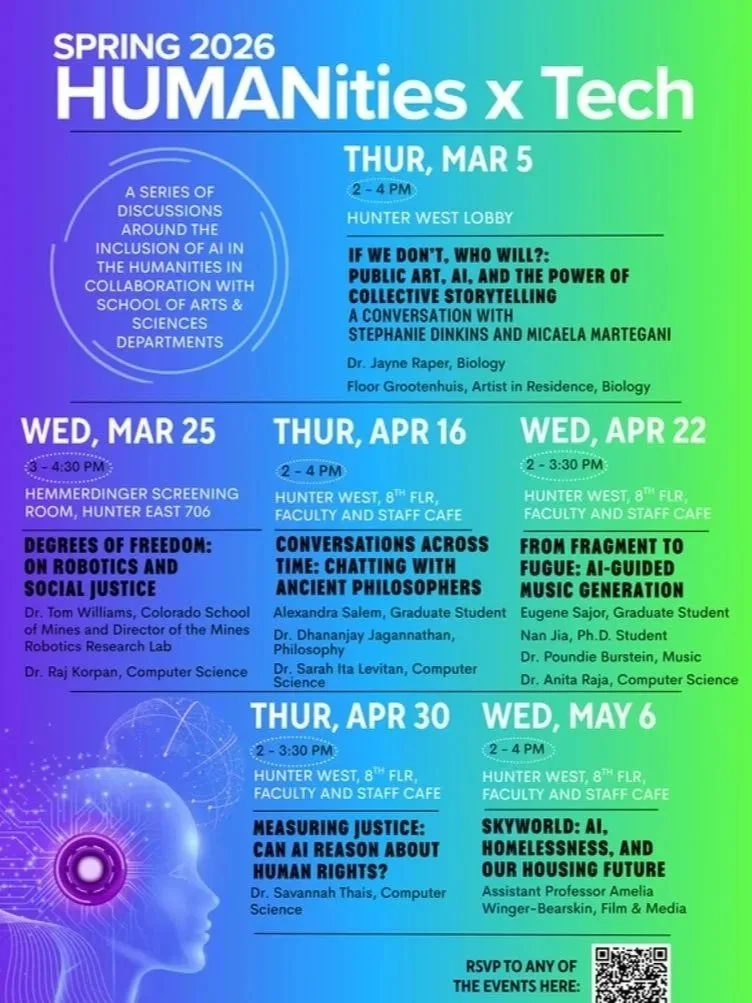

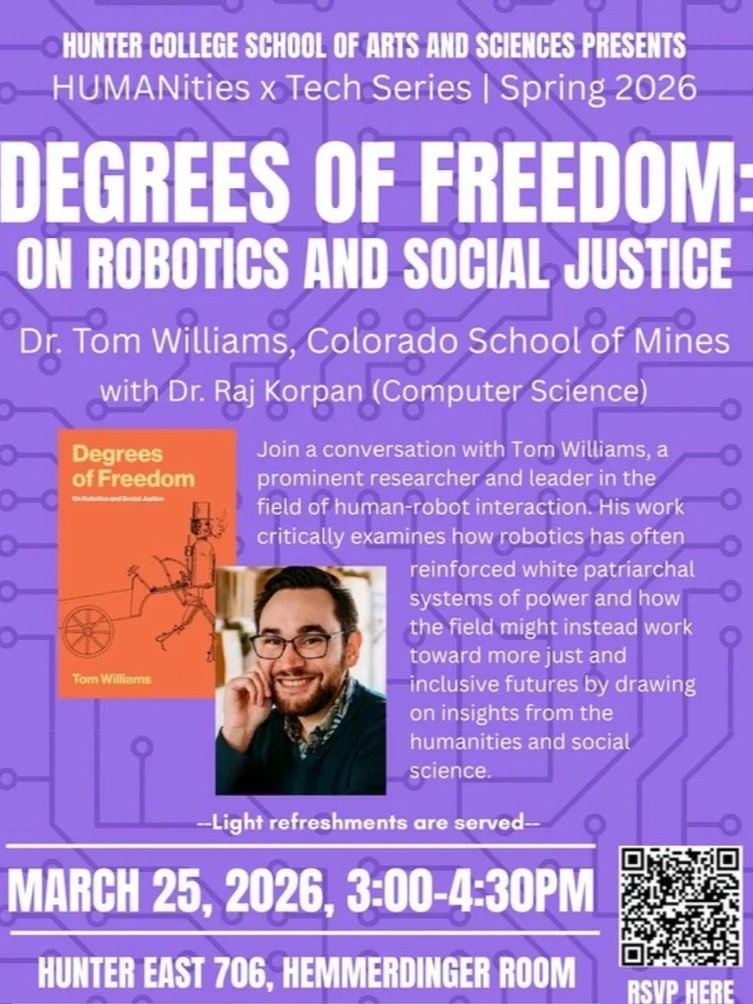
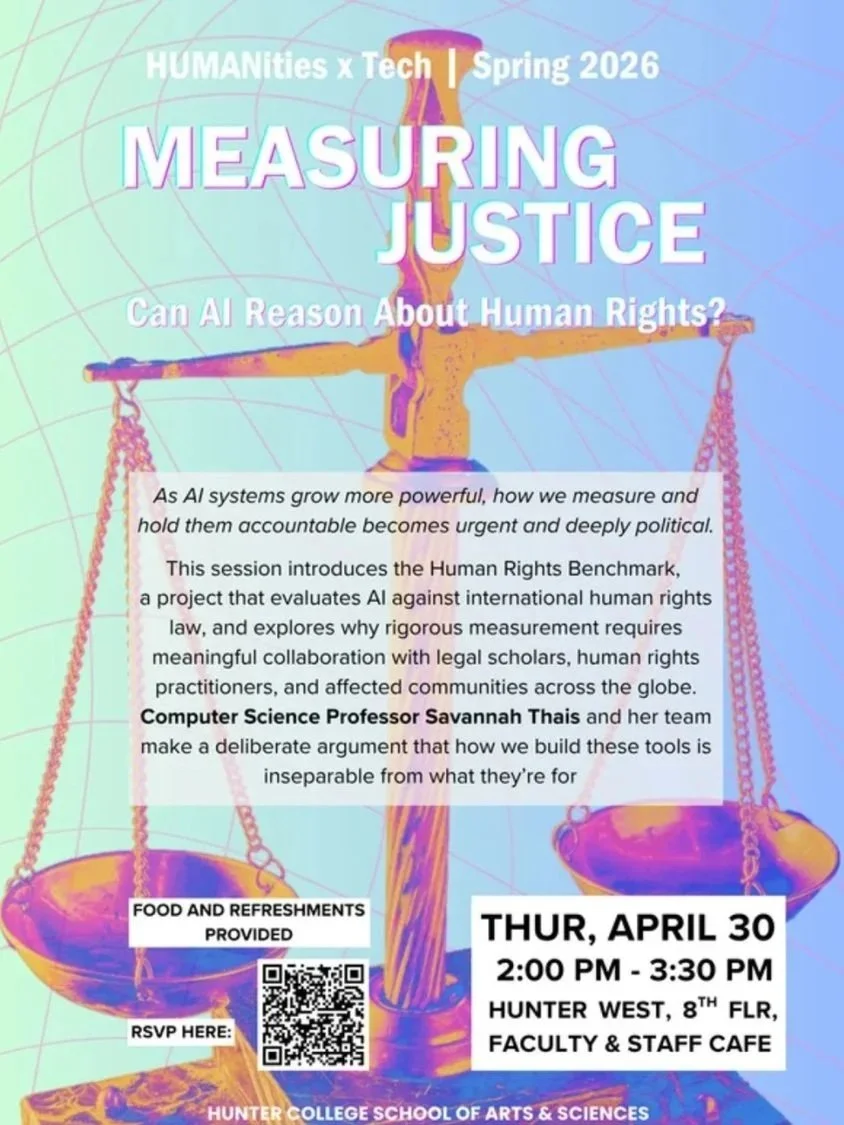
HUMANities x Tech is a multi-semester interdisciplinary initiative that places the humanities, arts, and social sciences at the center of how we think about, teach, and engage with emerging technology. It brings together faculty from across the school, including computer science, philosophy, sociology, film and media studies, music, Japanese studies, and art to explore, interrogate, and reimagine technology through the lens of cultural knowledge, creative expression, and social justice.
The initiative rests on a conviction that is simple and radical in equal measure: technological systems are cultural systems. The most important questions about artificial intelligence are not engineering problems. They are human ones.
Who does this technology serve? Whose knowledge does it encode? Whose experiences does it erase?
And what does it mean to build something that will shape the lives of billions of people without asking those people what kind of world they want to live in?
The Major
Building on the momentum of the series, HUMANities x Tech will serve as the foundation for a new interdisciplinary major currently in development at Hunter College, one that will pair computational literacy with storytelling, ethical reasoning, and interpretive analysis grounded in the humanities, arts, and social sciences.
The major will prepare students to understand technology, question it, and deploy it in the service of communities rather than corporations. It will draw on Hunter's existing strengths across computer science, sociology, film and media studies, philosophy, and the arts, and it will be designed specifically for students who carry the lived knowledge of what it means to be shaped by systems that were not built for them. Those students are not a gap to be filled. They are a resource the field has been ignoring.
We are not preparing our graduates for a narrow lane in a tech company, simply to use AI or even to regulate it. We are teaching them to shape it.
The students who move between these disciplines will take their insights into public service, cultural institutions, newsrooms, and community advocacy groups. They will carry the literacy to wield these tools with intention and the imagination to build entirely new ones.
The future of emerging technology is ours to shape. And to ensure it belongs to everyone, the students who will shape it must come from everywhere, including the streets, neighborhoods, and immigrant families that built New York City. Higher education must stop trying to beat the machines at their own game. We do not need to add a few token humanities concepts to technical programs. We must ground technology in the humanities.
Why it Matters Here?
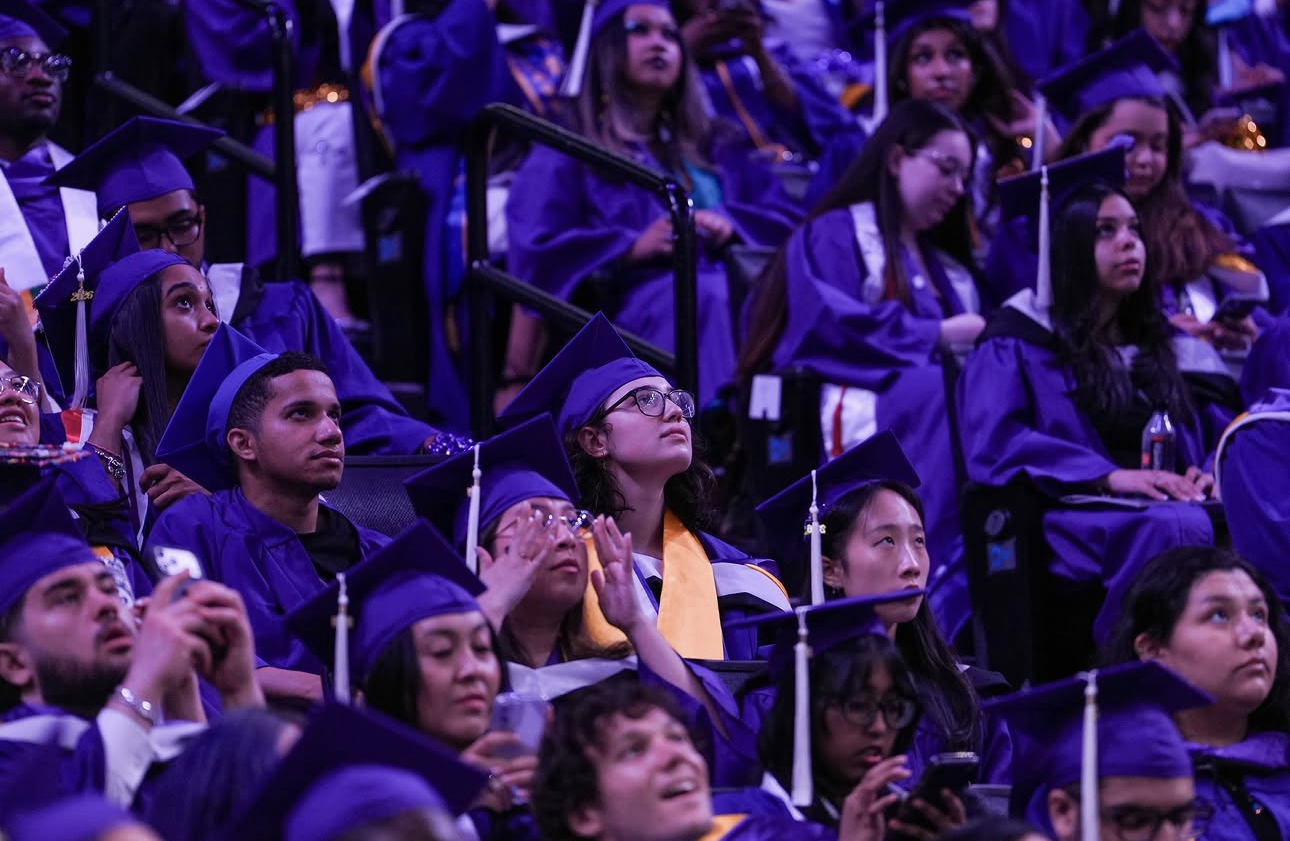
Hunter College serves nearly 17,000 undergraduate students and thousands more at the graduate level. The majority are first-generation college students, students of color, and the children and grandchildren of immigrants. They are exactly the population that most AI systems have failed to account for, and exactly the population that most technology companies have failed to hire, consult, or center.
That is not a deficit. It is an asset. Students who have navigated systems not built for them bring a structural fluency to questions of technology and power that no amount of technical training alone can produce. At Hunter, we are building a curriculum that honors that knowledge and puts it to work.
Public institutions like Hunter are uniquely positioned to lead this work, not despite the diversity of their student bodies but because of it. The question of who gets to shape AI is also the question of whose future is being built. We believe the answer should be everyone.
For Institutions & Partners
HUMANities x Tech is a replicable model. The series format, the co-creation approach, the curricular framework, and the underlying philosophy are all available for adaptation by other institutions, organizations, and communities grappling with the same questions.
If you are a university, foundation, policy organization, or community group interested in learning more about the HUMANities x Tech model, in partnering with Hunter's School of Arts and Sciences, or in bringing this conversation to your own institution or audience, please reach out.